Search

How automation creates opportunities
Automation solutions offer enormous potential for addressing a wide range of emerging problems while also opening up new opportunities. How can automation be used in the CNC industry to successfully strengthen their position in the market?
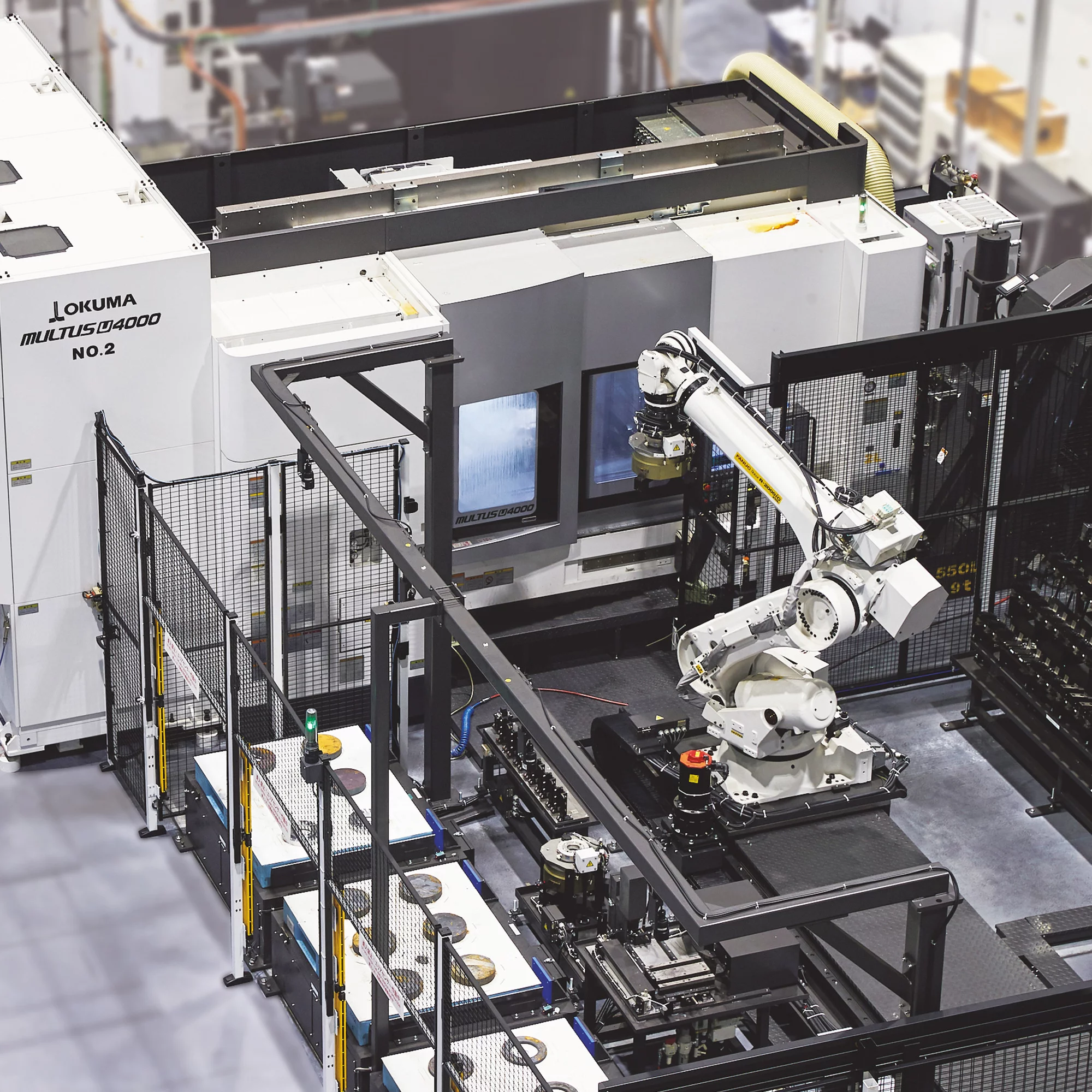
Increasing efficiency & throughput
One of the key benefits of automation is that it ensures continuous operation. Automated loading and unloading systems, pallet changers, and flexible robotic solutions enable low-manpower or even unmanned operation across multiple shifts. Machines can produce reliably at night, on weekends, or during operator breaks. Downtimes are significantly reduced as material flow and machine operation can be perfectly coordinated. The result is higher machine availability and better utilization of existing equipment.
Improving quality and consistency
Automation also reduces throughput times. Setup, transport, and waiting times are minimized, while automated workflows ensure overall process stability. By reducing manual intervention, sources of human error are minimized. Workpieces are moved faster and without interruptions between the individual processing steps, thus avoiding bottlenecks. Standardized processes and integrated control of machines, handling, and logistics allow orders to be planned and prioritized efficiently. This means shorter delivery times, and improved responsiveness to urgent orders or last-minute changes.
Relieving and enhancing the value of employees
Automation relieves employees of repetitive, physically demanding, or monotonous tasks. This frees up time for higher value activities such as programming, process optimization, and quality assurance, and continuous improvement.
Reducing costs and strengthening competitiveness
Increased efficiency, reduced downtimes, and lower error rates enable manufacturers to reduce their cost base. This keeps them competitive - especially in global markets with lower labor costs. In addition, automated systems often allow for more flexible batch sizes and quick changeovers, which is an huge advantage in today's volatile markets.
Guide - Getting started with CNC automation
The range of CNC automation can be overwhelming. How do I get started? What should I look out for? Which type of automation is best suited to my business? There are lots of questions. This quick guide provides an initial overview. In addition, our Okuma experts are pleased to support you throughout your decision-making process.
Key considerations when choosing an automation solution
⇒ What is your main goal? (e.g. faster processing, reduced operator workload, higher productivity, more flexibility...)
⇒ Production environment (space limitations, accessibility, layout constraints...)
⇒ Part variety (small batches, mixed production, mass production)
⇒ Product specifications (material, dimensions, tolerances...)
⇒ Cycle times (short cycles vs. long machining processes)
⇒ Operator skill levels (level of expertise needed to run and maintain the system)
⇒ Future scalability (ability to expand)
Starting small is a good approach. A lot of manufacturers begin with a single automated cell and expand once their processes are stable and optimized.